
When Bryan Walstrom Came to JetGlow: Protecting Your Airplane the Right Way
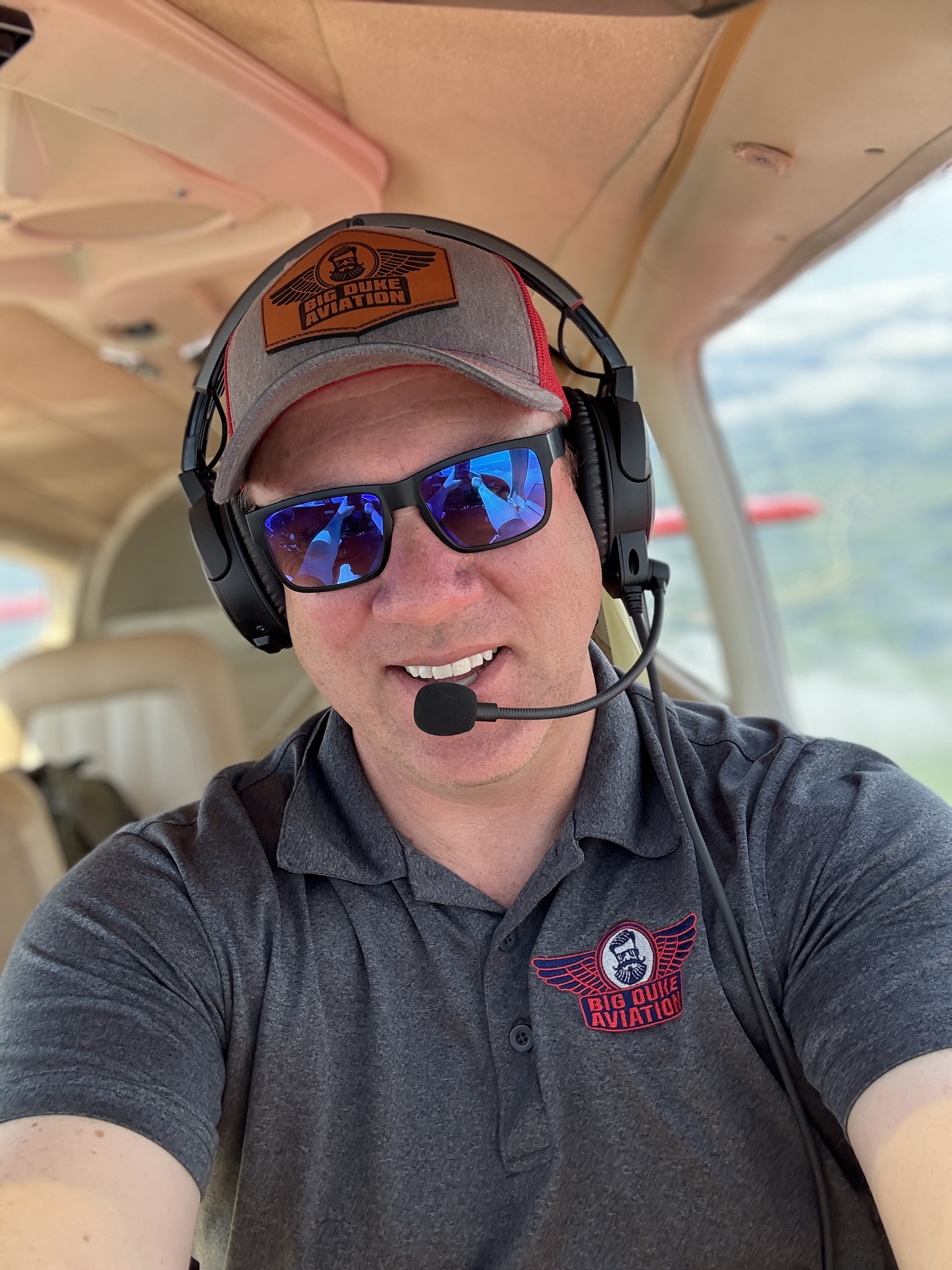
When Bryan Walstrom from the Experimental Aircraft Channel arrived at JetGlow HQ, this wasn’t just another interview for YouTube. It was a working session focused on one thing: helping aircraft owners understand how to properly protect their investment.
We started the visit the right way, not with towels or polishers but with a conversation.

It Started with Chemistry at JetGlow
Standing next to the airplane, we talked about products and chemicals first. Before anyone touches paint, they need to understand what they’re putting on it.
We discussed why some automotive products are not aircraft safe, how pH balance affects painted surfaces, and what degreasers are actually doing at a chemical level. Aircraft paint systems are thinner and far more expensive than automotive finishes. Using the wrong product can shorten the life of the paint without you realizing it.
Bryan asked the kinds of questions every aircraft owner and builder should ask:
What is this product actually doing to the surface?
How much material is removed during polishing?
How do you know when enough is enough?
That foundation matters. Without understanding the “why,” it’s easy to unintentionally damage the finish.
Tools of the Trade
Next, we laid out the tools of the trade.
Dual-action polishers, pads, compounds, microfiber towels, not as props, but as a system.
We explained:
Why a dual-action polisher is safer than a rotary for most aircraft owners
How the pad determines the level of cut
How the polish provides the abrasive
Why machine speed and pressure control matter more than brute force
Every time you polish, you are removing material. Controlled correction is professional. Guessing is risky. Understanding paint thickness and tool control is what separates safe restoration from unnecessary paint removal.

Dry Wash Demonstration
From there, we moved into a proper dry wash process on the ramp.
Dry washing isn’t just spray and wipe. It requires lubrication, disciplined section work, and constant towel rotation to avoid grinding contamination into the surface.
We demonstrated how to:
Float contaminants off the paint
Manage wipe direction and pressure
Protect antennas and sensitive components
Work leading edges differently than flat panels
Done correctly, a dry wash preserves the finish. Done incorrectly, it creates swirl marks that slowly degrade the paint.
Bug Removal on Leading Edges
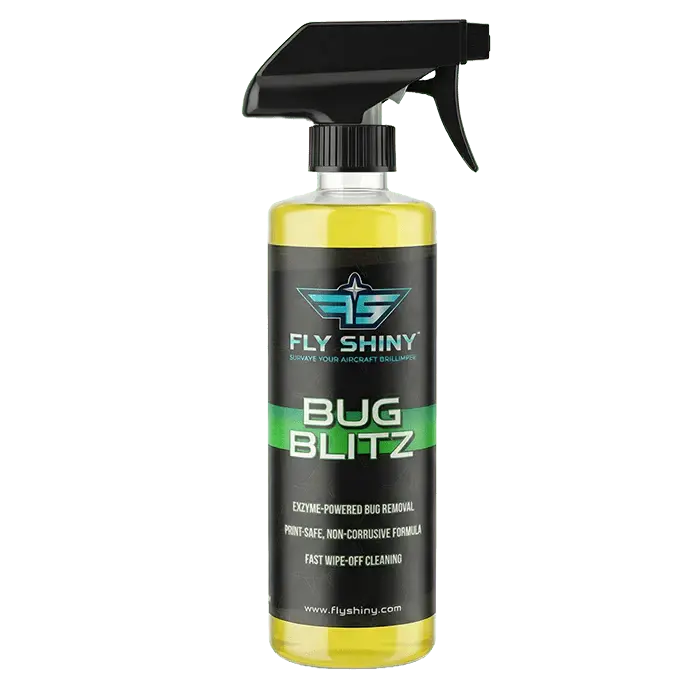
Leading edges take a beating during flight. Bugs bake onto the surface, especially in summer.
Instead of aggressive scrubbing, we showed how to soften the contamination first, allow proper dwell time, and use safe agitation techniques. The goal is always removal without thinning the paint


Exhaust and Oil Residue Removal
Underneath the aircraft, we addressed exhaust residue and oil streaking areas many owners over-attack.
Using FlyShiny aviation-approved products, we demonstrated controlled degreasing techniques and how patience often produces better results than force. Stronger chemicals and aggressive scrubbing can permanently damage paint if used improperly.
Protection comes first.

Compounding and Polishing Oxidized Paint
Then came paint correction.
We examined an oxidized section of paint dull, chalky, and faded. Instead of assuming repainting was necessary, we assessed the surface and selected the appropriate pad and compound. We use Menzerna 400 to do the paint correction. But remember not all corrections are the same. A combination between pad and compound will change with every paint job so first do a test and see how it will work out for you.
With a dual-action polisher running at a controlled speed, we demonstrated how slowing down actually increases gloss and clarity. Oxidation can often be safely removed when the process is deliberate and controlled.
When the corrected section caught the light, the transformation was immediate. This is where many owners realize they don’t need a repaint, they need proper technique.

Applying 30-Day Ceramic Protection
After correction, we sealed the surface with a 30-day ceramic spray coating.
This provides:
Increased gloss
Hydrophobic protection
Easier future cleaning
Added UV resistance
Correction without protection leaves fresh paint exposed. Sealing the surface completes the process.
Why This Matters for Owners and Builders
As we wrapped up the visit, we stepped back and looked at the airplane.
For builders, this aircraft represents years of effort and pride. For owners, it represents a significant financial investment. Improper washing and polishing habits don’t just dull paint. They shorten the lifespan of the finish, impact resale value, and increase long-term maintenance costs. Most paint damage doesn’t happen in the air. It happens during cleaning.
Bryan came to JetGlow to learn the science behind proper aircraft washing, correction, and protection. What viewers will see in this upcoming episode isn’t just about shine it’s about asset preservation.
The full episode will air in about two weeks on the Experimental Aircraft Channel’s YouTube page. If you own or built an airplane, this is one worth watching.
Follow Bryan & Watch the Episode
You can follow Bryan and the Experimental Aircraft Channel here:


Comments