
Private Jet Interior Surfaces Explained
What You’re Really Sitting On, Walking On, and Touching at 40,000 Feet
When aircraft owners think about detailing, most picture shiny paint and polished brightwork. But the truth is this: the interior of your aircraft is where value quietly erodes, or appreciates.
At JetGlow, we don’t just clean cabins. We preserve high-value aviation materials engineered for performance, weight savings, fire resistance, and luxury. If you own or operate a private aircraft, understanding your interior surfaces is the first step in protecting your investment.
Let’s break it down.

Private Jet Aircraft Leather Seating
Most executive aircraft use aviation-grade leather. This is not automotive leather. It is specifically engineered for flight.
What makes aviation leather different:
Flame-resistant and FAA compliant
Lightweight backing systems
Specialized dyes and protective topcoats
Often semi-aniline or protected finishes
Common problems we see:
Body oil buildup
Dye transfer from clothing
Dry cracking due to low cabin humidity
Abrasion on armrests and headrests
This isn’t “grab a leather wipe” territory. Aviation leather requires neutral pH cleaners and proper conditioning cycles to prevent premature wear. Improper cleaning strips protective coatings and shortens the life of the hide.
In aircraft like a Gulfstream G650 or a Phenom 300, the seating alone represents a significant capital investment. Treat it accordingly.

Private Jet Veneer & Wood Trim
High-gloss veneer is one of the most delicate surfaces in a private jet cabin.
What it is:
Thin, real wood veneer
Clear-coated with specialized aerospace finishes
Often high-gloss “piano” style
What damages it:
Ammonia-based cleaners
Paper towels
Micro-scratching from improper wiping
Excess moisture
Improper cleaning slowly dulls the gloss. Once clarity fades, restoration becomes expensive and invasive. Preservation is far more cost-effective than correction.

Cabin Windows & Window Shades
Interior aircraft windows are typically acrylic—not glass.
That matters.
Acrylic scratches easily. The wrong chemicals cause hazing. Paper towels create permanent micro-scratches.
Even wiping dust incorrectly can leave swirl marks that catch sunlight mid-flight. Proper aviation-safe cleaners and microfiber protocols are critical for maintaining clarity.
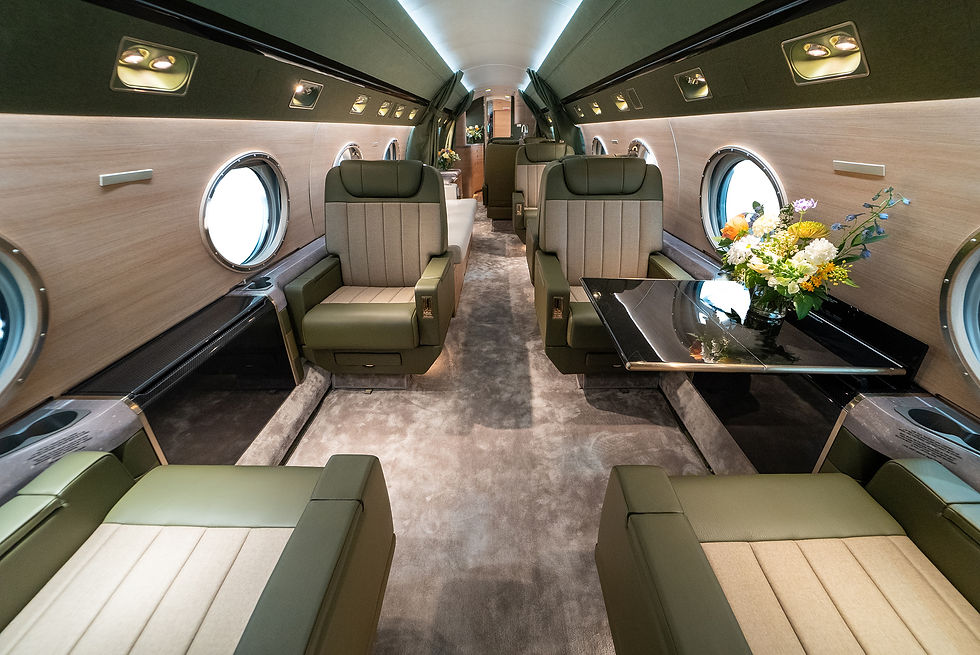
Carpet & Flooring Systems
Cabin flooring is more complex than it appears.
Common materials include:
Wool blend aviation carpet
Lightweight synthetic carpet
Composite subfloor systems
Galley vinyl or laminate panels
Primary threats:
Coffee and wine staining
Ground-in debris
Excess moisture during cleaning
Chemical overspray
Moisture management is critical. Over-wetting can compromise adhesives beneath the carpet and lead to long-term damage.
Metal & Plated Surfaces
Inside a private jet you’ll find:
Brushed aluminum
Chrome-plated hardware
Stainless steel fixtures
Custom anodized components
Aggressive cleaners can strip finishes or cause pitting. Even fingerprints left untreated can etch certain surfaces over time. These materials require chemical compatibility and controlled polishing methods—not household products.
Galley & Lavatory Surfaces
These areas combine multiple materials in tight quarters:
Solid surface countertops
Composite panels
Stainless fixtures
Mirror finishes
Sanitization matters—but so does chemical selection. The wrong disinfectant can haze, discolor, or degrade sensitive finishes.
In aviation, “stronger” is not better. Correct is better.
Why Interior Surface Preservation Matters
Your aircraft interior directly impacts:
Resale value
Passenger experience
Brand perception
Long-term maintenance costs
Interior degradation doesn’t happen overnight. It happens slowly, through improper cleaning, skipped maintenance cycles, and quick fixes.
A properly maintained cabin preserves:
Gloss
Softness
Color integrity
Protective finish layers
That protection translates into real dollars at resale and a consistently premium passenger experience.
The JetGlow Approach
At JetGlow, we treat interior detailing as Interior Surface Preservation, not housekeeping.
We evaluate:
Material type
Finish layer condition
Chemical compatibility
Wear patterns
Then we apply aircraft-safe processes designed specifically for aviation. Not automotive crossover methods. Not guesswork.
Because your jet is not a car.And your cabin is not furniture.


Comments